WE TRAVEL. WE EXPLORE. WE DISCOVER.
–
WE TRAVEL. WE EXPLORE. WE DISCOVER. –
BRITISH SPIRITS. SOUTHEAST ASIAN SOUl
We are proud to partner with Tarsier, an independent British spirits company built around the flavours of Southeast Asia—and committed to protecting one of its most remarkable inhabitants.
The idea began with a backpacking journey through the Philippines, Thailand, Vietnam and Cambodia. The founders returned to England with a taste for calamansi, galangal, Thai sweet basil, Kampot pepper and the sort of food that makes an ordinary Tuesday feel considerably more interesting.
They decided to put that experience into a gin.
They also made the Philippine tarsier part of more than the packaging. The company donates 10% of its profits to conservation projects protecting these extraordinary animals and their natural habitats.
There is a danger in describing any spirit as a journey in a bottle.
Tarsier has the unusual advantage of actually tasting like one.
The range is bright, aromatic and full of character, bringing familiar Southeast Asian ingredients into carefully made spirits that work just as well in a simple highball as they do across a serious cocktail list.
The story takes you around Southeast Asia.
The liquid—and one particularly wide-eyed primate—gives you a reason to pay attention.
WHY WE CHOSE
TARSIER
There is no shortage of gin.
There is, however, a shortage of gin with a convincing reason to exist.
Tarsier has several.
Its flavours come from genuine experience of Southeast Asia and a real understanding of the ingredients that make the region’s food and drinks so distinctive. Calamansi brings vivid citrus. Galangal adds aromatic spice. Thai sweet basil provides herbal freshness. Kampot pepper leaves a warm, lingering finish.
Nothing feels as though it has been included simply because someone in a meeting decided the bottle needed an exotic ingredient.
The same is true of the animal on the label.
The Philippine tarsier reflects the curiosity and Southeast Asian identity behind the brand, but it is not simply a convenient mascot. Tarsier donates 10% of its profits to conservation projects protecting the animals and their habitats.
That combination matters to us: distinctive spirits, a genuine connection to the region and a commitment that extends beyond what is inside the bottle.
It feels particularly relevant in Hong Kong. These are flavours people here already know, but Tarsier presents them in a different context: distilled in Britain, built for the modern bar and ready to be explored through familiar serves.
The range gives bartenders something new to work with without asking customers to learn an entirely new drinking language. The bottles are distinctive. The flavours are easy to introduce. And each expression has enough personality to inspire a cocktail of its own.
Tarsier does not look at Southeast Asia from a distance.
It puts the region at the centre of the glass—and gives something back to it.
Small animal.
big purpose
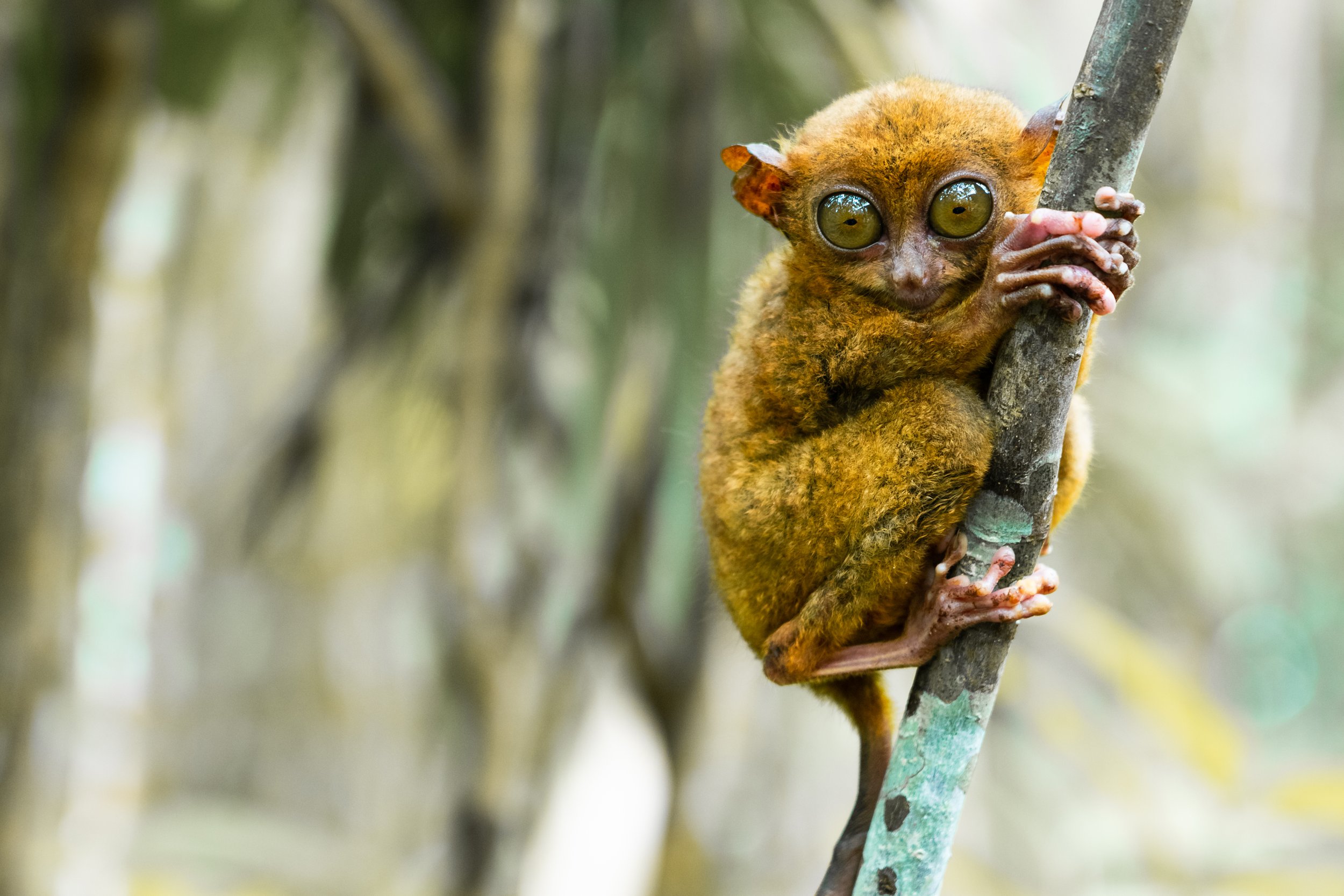
The Philippine tarsier is one of the world’s smallest primates.
It is also mostly eyes.
The animal was chosen because it captured the spirit of the brand: curious, unmistakably Southeast Asian and considerably more distinctive than its size might suggest.
But the tarsier is more than a memorable face on the bottle.
Habitat loss and human disturbance have placed these tiny primates under serious pressure. Tarsier’s mission is to raise awareness of their plight while providing practical support for the people working to protect them.
The company donates 10% of its profits to conservation projects in Southeast Asia. Its first conservation partner is the Philippine Tarsier Foundation, which works to protect the animals and their natural habitats.
That gives the brand’s name a purpose beyond packaging.
The animal gets people looking.
The commitment gives them something worth seeing.
from backpack
to back bar
arsier began with a journey across Southeast Asia in 2015.
The founders travelled through the Philippines, Thailand, Vietnam and Cambodia, moving between jungles, cities, islands, street markets and temples. Along the way, they discovered ingredients and flavour combinations that would eventually shape the brand.
When they returned to England, they began experimenting in a Manchester kitchen with a small copper still and botanicals sourced from across the region.
They were not distillers.
This proved inconvenient rather than discouraging.
Fruits, herbs and spices were tested. Ratios were adjusted. Botanicals were rejected. Dozens of recipes were produced before the first Southeast Asian Dry Gin finally took shape.
Early production took place in a small room behind a pub, using two 60-litre copper alembic stills named Florencia and Graciano after co-founder Sherwin Acebuche’s Filipino grandparents.
Today, Tarsier uses more advanced equipment, including a modern iStill and a vacuum still that allows delicate botanicals to be distilled at lower temperatures, helping to preserve their brighter, fresher characteristics.
The equipment has changed. The curiosity has not.
a region too big
for one bottle
Southeast Asia does not have a single flavour.
Tarsier is not foolish enough to suggest otherwise.
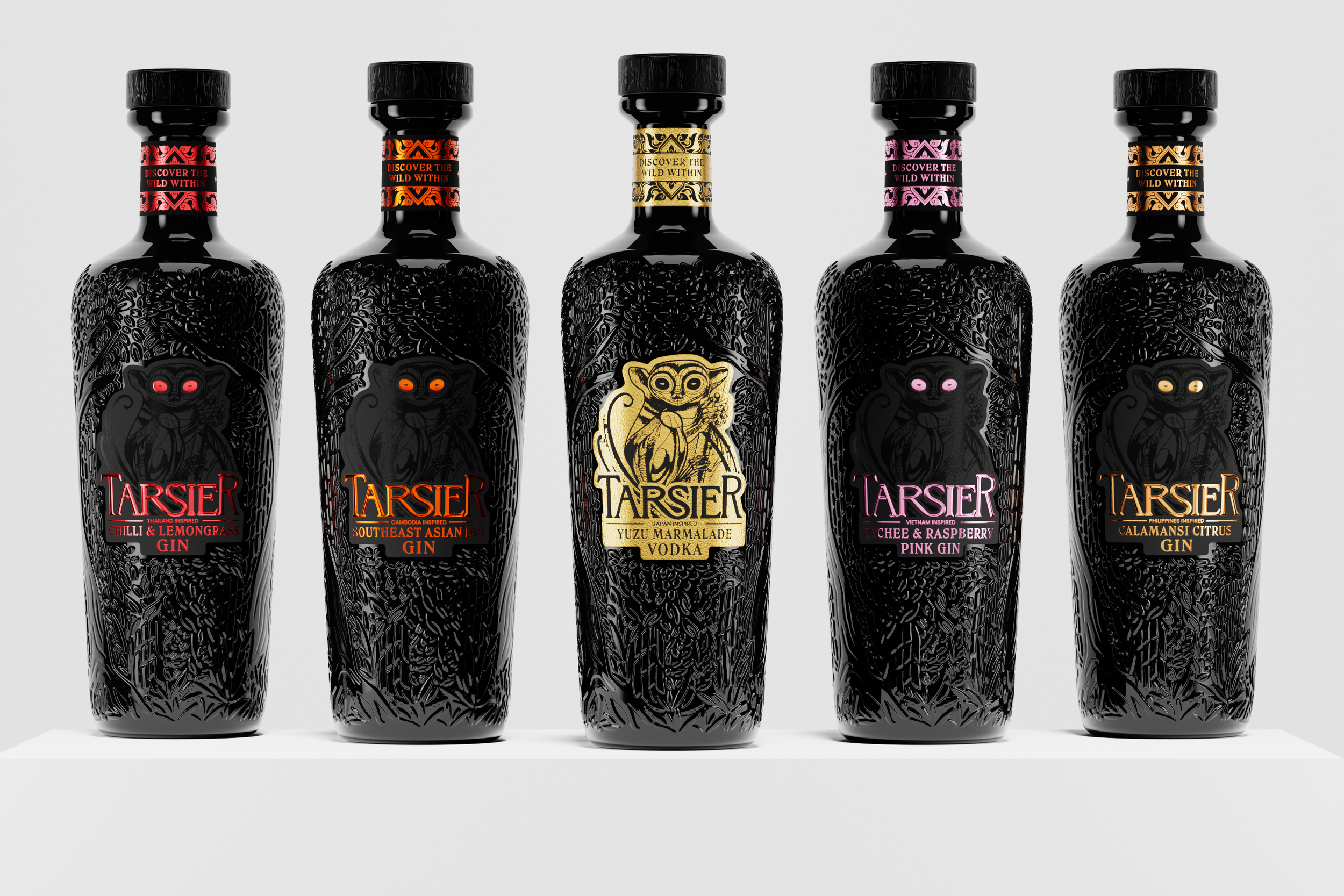
The range moves through different countries, ingredients and drinking styles, with each bottle exploring a particular part of the region.
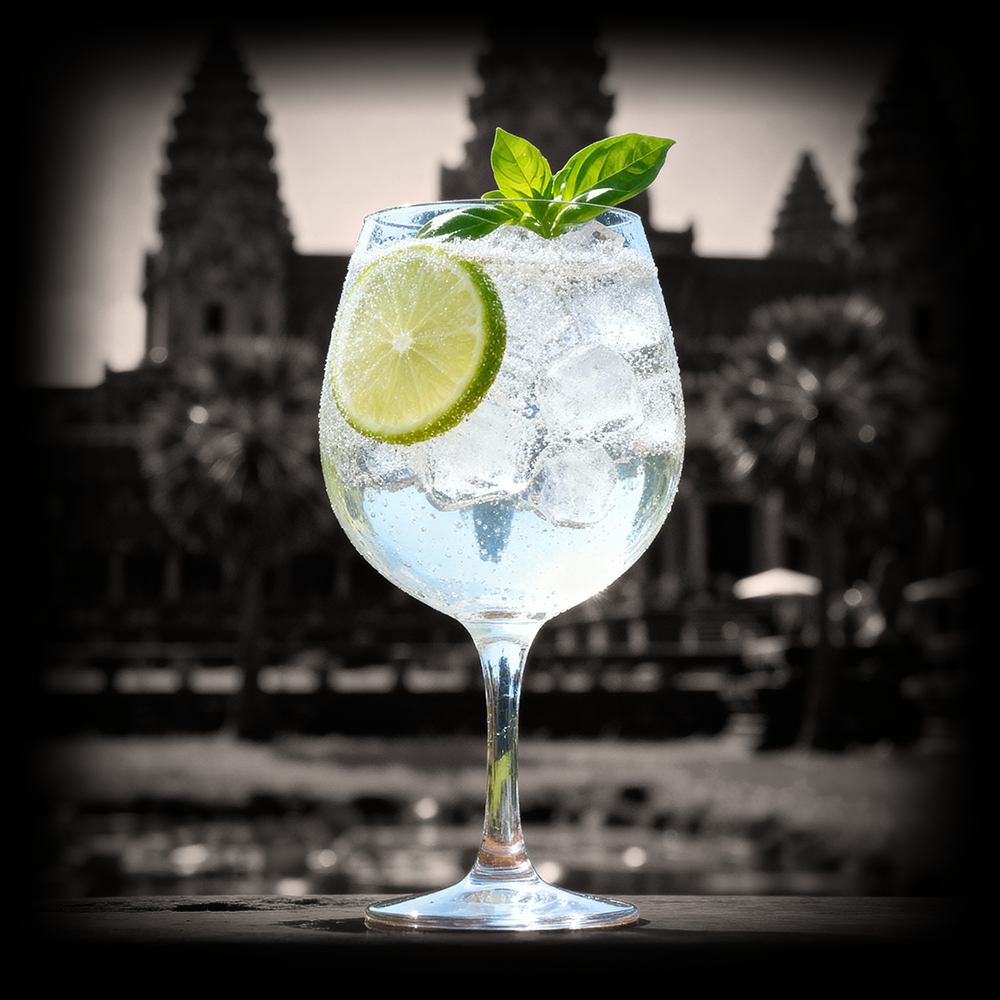
Southeast Asian Dry Gin takes its inspiration from Cambodia, combining calamansi, galangal, Thai sweet basil and Kampot pepper. It is citrus-led and aromatic, with savoury spice underneath and a long, gently peppery finish.
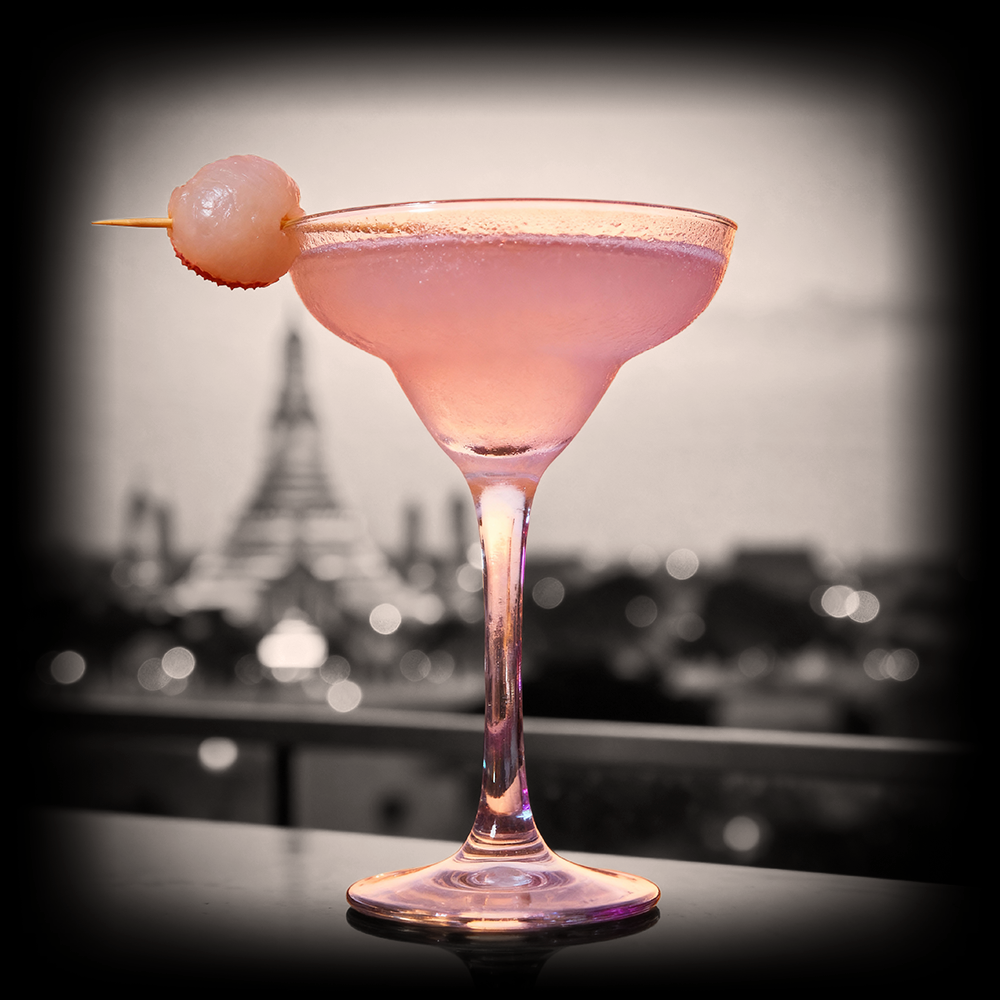
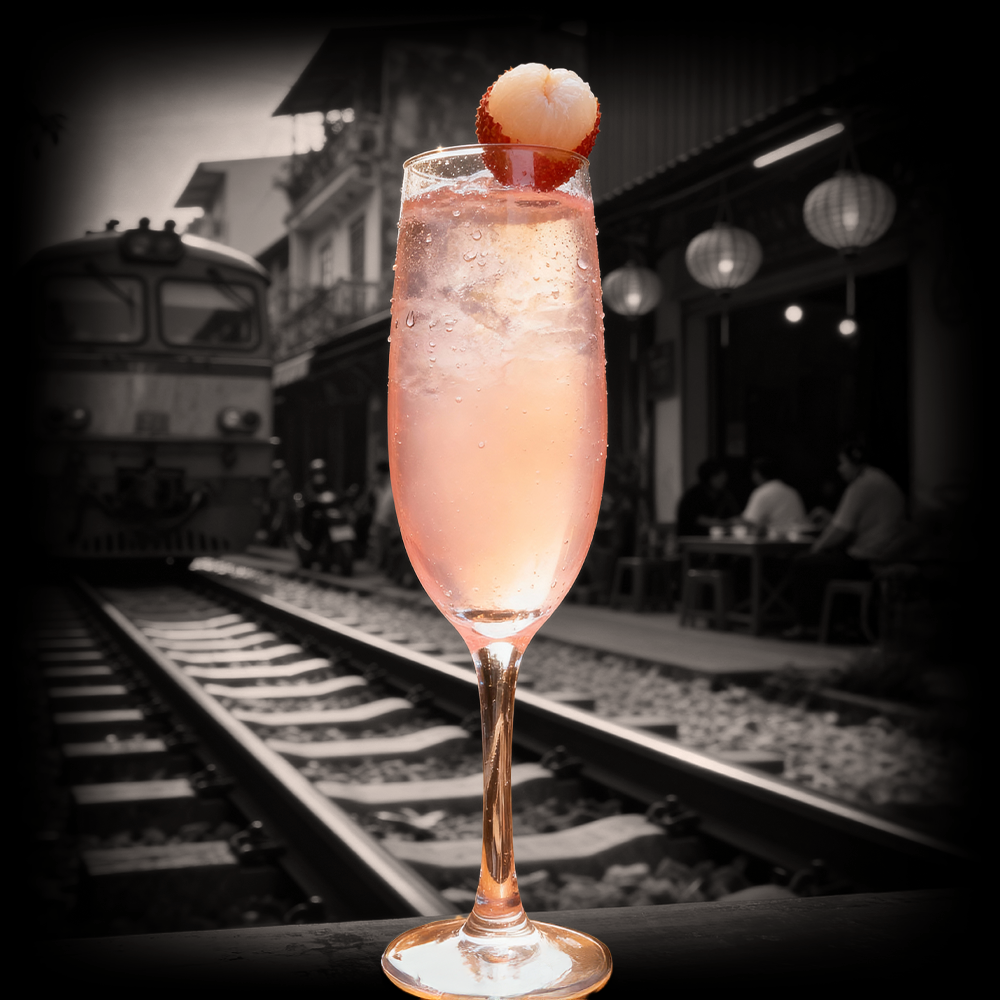
Lychee & Raspberry Pink Gin looks towards Vietnam, balancing juicy tropical fruit and raspberry with enough freshness to keep everything composed.
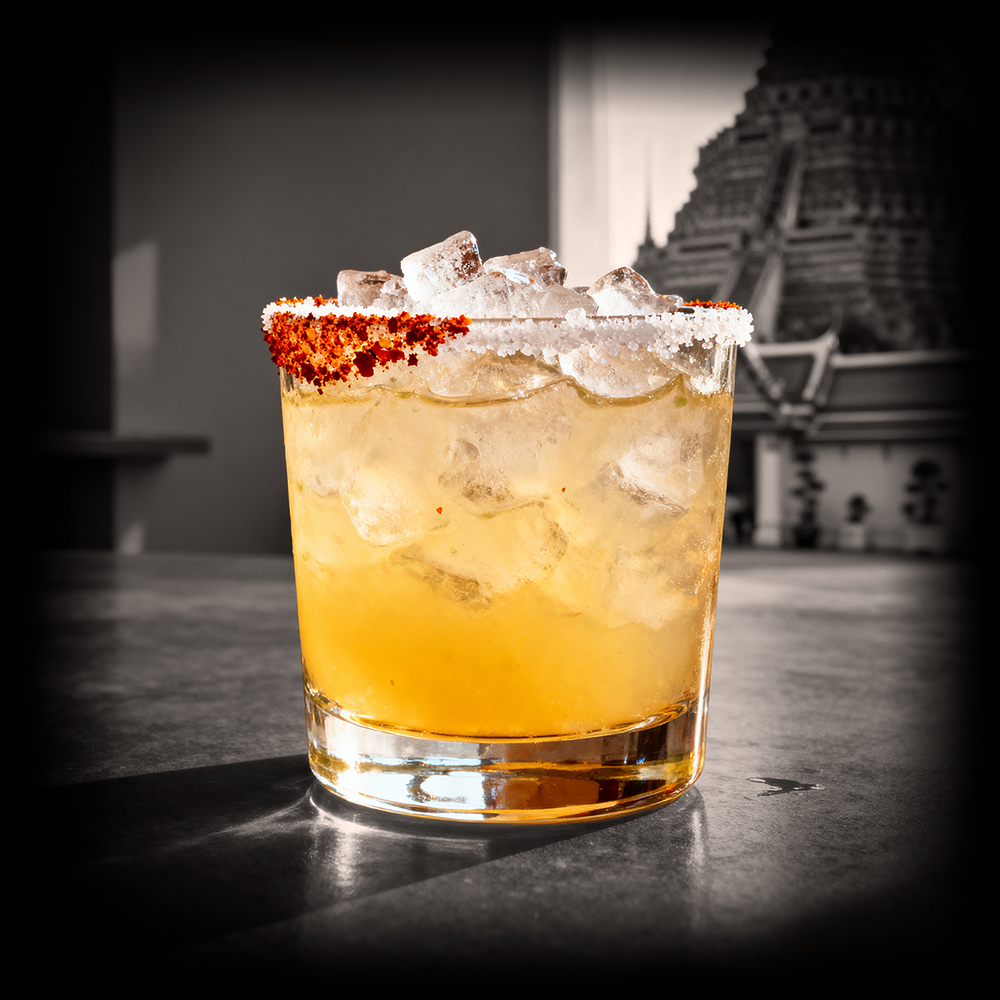
Chilli & Lemongrass Gin brings together fragrant citrus and a controlled flicker of heat inspired by the flavours of Thailand.
Calamansi Citrus Gin is bright, zesty and unmistakably Filipino, pairing calamansi with yuzu and makrut lime leaf.
Oolong Tea Old Tom Gin takes its inspiration from Taiwan, offering a smoother, more botanical expression built around aromatic tea.
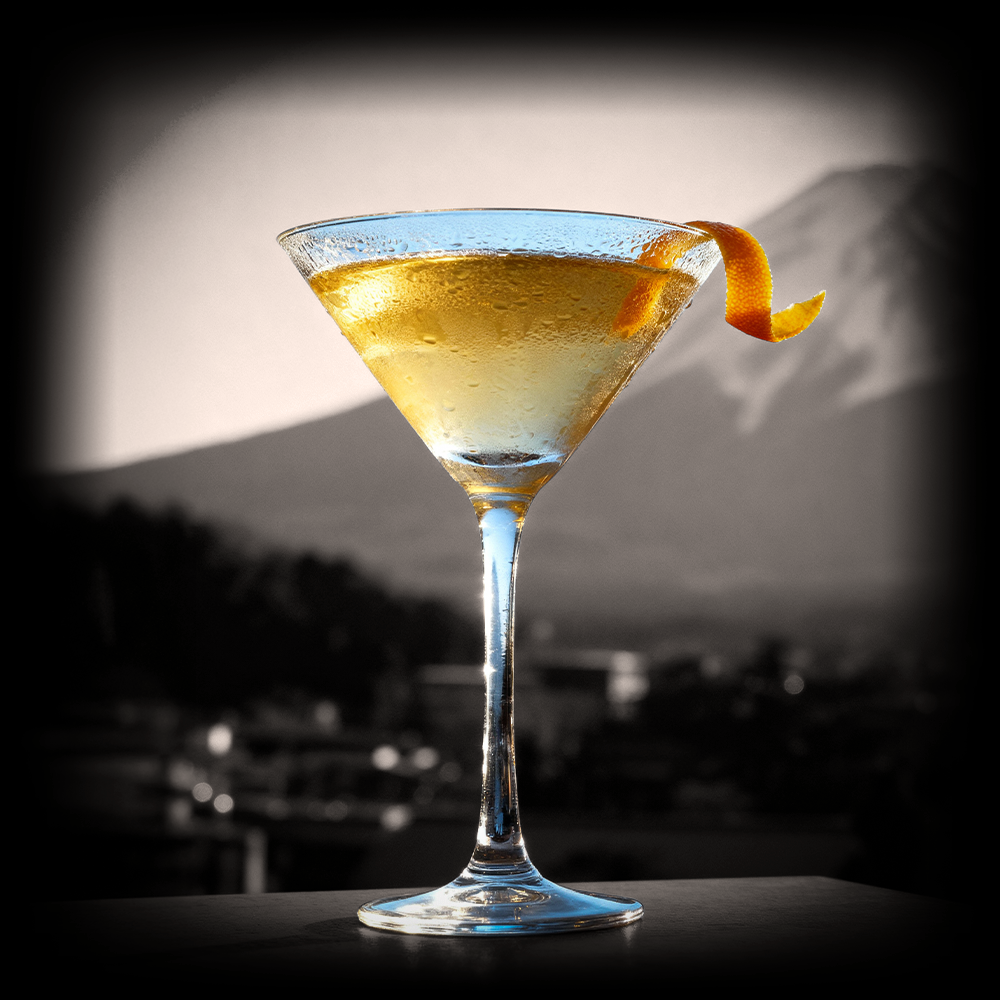
Yuzu Marmalade Vodka completes the journey with sweet citrus, gentle bitterness and a distinctly Japanese point of view.
Together, the bottles offer fruit, spice, citrus, herbs, tea and heat.
Quite a lot of Asia, in other words.
But never all mixed into the same bottle.
the spirit
of discovery
Tarsier brings together many of the things we look for in a partner.
An independent point of view. A story that belongs naturally to the liquid. Flavours with a genuine sense of place. And spirits that give Hong Kong’s bartenders something useful, distinctive and enjoyable to pour.
It is made in Britain, but Southeast Asia runs through the entire range.
Not as decoration. Not as a loose theme. And certainly not as a collection of ingredients chosen because they sound adventurous on a label.
These are spirits inspired by travelling through the region, experiencing its food and learning how its flavours work together.
The commitment to conservation gives that connection greater meaning. Tarsier does not simply borrow the name and image of a threatened animal. It uses both to raise awareness and directs part of its profits towards protecting the animal and its habitat.
That matters to us.
So does the fact that the spirits are excellent.
Tarsier gives bartenders new possibilities, customers a story worth discovering and the back bar something with a genuine reason to be there.
British distilling. Southeast Asian flavour. And one exceptionally alert-looking primate keeping an eye on proceedings.
MADE FOR
THE BAR
Tarsier gives bartenders plenty to work with without making life unnecessarily complicated.
The flavours are distinctive enough to build a signature serve around, but clear enough to explain across a busy bar.
A customer may not immediately know what galangal contributes to a gin.
They understand “citrus, herbs and gentle spice” perfectly well.
Each bottle can make an impression in a straightforward serve while offering more creative bars the ingredients and structure to go further. That gives the range useful flexibility: accessible enough for a first gin and tonic, interesting enough for the second cocktail.
It also works naturally with food.
The citrus-led expressions have the freshness for seafood, salads and fried dishes. Chilli & Lemongrass is at home beside Thai flavours, grilled meat and richer sauces. Oolong Tea Old Tom has the depth for roast meats and savoury dishes, while Lychee & Raspberry provides a lighter partner for fruit, gentle spice and desserts.
That makes the range particularly useful in Hong Kong, where one table may be sharing several dishes and the drink is expected to keep up with all of them.
The bottles also look as though they belong on a back bar. The wide-eyed tarsier is immediately recognisable, gives the brand a natural conversation starter and neatly captures the personality of the liquid.
Small.
Curious.
Rather difficult to overlook.